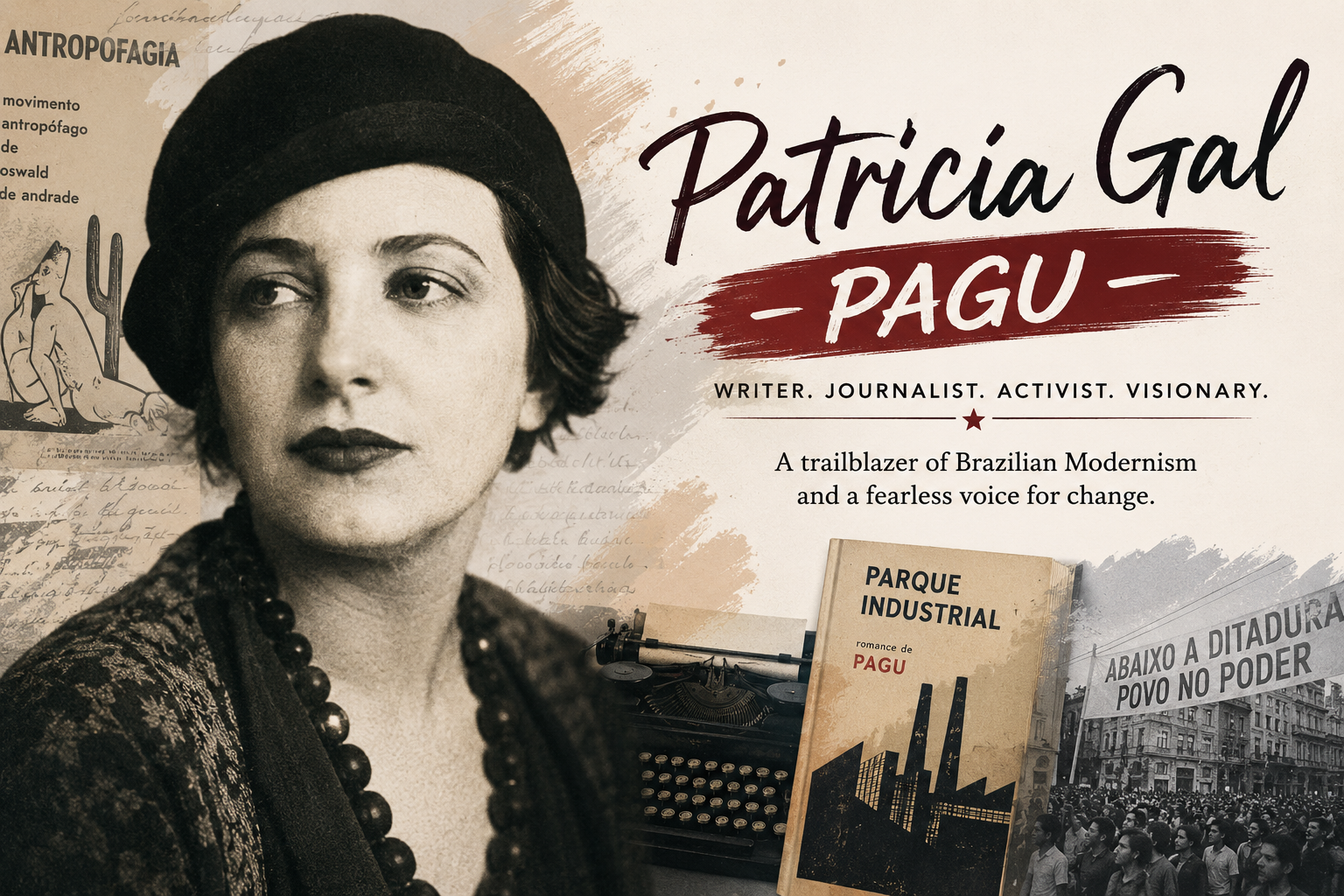
Patrícia Galvão, better known as Pagu, remains one of the most fascinating and influential cultural figures in modern Brazilian history. Writer, journalist, translator, political activist, and artistic pioneer, she challenged social expectations at a time when women were rarely encouraged to speak publicly or shape political debate.
Today, interest in Patricia Gal continues because her life went far beyond literature. She became a symbol of creative freedom, intellectual courage, and political engagement. Her work and public life helped shape conversations around feminism, modernism, labor issues, and artistic experimentation in Brazil.
This article explores who Patricia Gal was, how she became known as Pagu, and why her legacy still matters.
Who Is Patricia Gal? A Short Biography
| Detail | Information |
|---|---|
| Full Name | Patrícia Rehder Galvão |
| Date of Birth | June 9, 1910 |
| Birthplace | São João da Boa Vista, São Paulo, Brazil |
| Nationality | Brazilian |
| Profession | Writer, Journalist, Poet, Translator, Political Activist |
| Years Active | 1920s–1962 |
| Education | São Paulo Normal School |
| Famous For | Brazilian Modernism, literature, journalism, activism |
| Marital Status | Married |
| Spouse | Oswald de Andrade (1930–1935), Geraldo Ferraz |
| Children | 2 |
Early Life and the Making of Pagu
A Young Voice in a Changing Brazil
Patrícia Rehder Galvão was born in 1910 and moved to São Paulo during childhood. From an early age, she showed strong interests in literature, journalism, and cultural life. As a teenager, she was already contributing to newspapers and developing a public voice.
Her education coincided with a period of rapid change in Brazilian society. Cities were growing, industrialization was reshaping work, and intellectual circles were questioning traditional European influences. These ideas would later become central to her career.
How She Became “Pagu”
The nickname “Pagu” became inseparable from her identity. The name was reportedly created by poet Raul Bopp and soon became her literary and public persona.
Pagu entered Brazil’s modernist movement through connections with leading artistic figures of the period. Rather than remaining a background participant, she quickly developed her own identity through writing, illustration, and commentary. Her public image stood out because she openly rejected social expectations placed on women at the time.
Patricia Gal and the Brazilian Modernist Movement
More Than a Literary Figure
Although Pagu is often introduced through her relationship with writer Oswald de Andrade, her achievements stand independently.
Brazilian Modernism encouraged experimentation and challenged cultural conventions. Pagu became one of its boldest voices through journalism, fiction, visual expression, and political writing.
Her writing style reflected urban realities and social inequalities. She brought working-class experiences and women’s perspectives into spaces traditionally dominated by elite voices.
Literary Contributions That Left a Mark
One of her most recognized works is Parque Industrial (“Industrial Park”), published under a pseudonym. The novel explored labor conditions, class divisions, and the lives of women in industrial environments.
The book is frequently discussed as one of the earliest Brazilian works associated with socially engaged and feminist literary traditions. Rather than romanticizing hardship, Pagu presented everyday struggles with unusual directness.
Journalism and Cultural Commentary
Pagu also became known for newspaper writing and cultural criticism.
Her articles covered politics, arts, and society with unusual boldness. She worked as a correspondent during international travels and continued writing throughout periods of political conflict and personal transformation.
Her journalism expanded her influence far beyond literary circles.
Political Activism and Personal Sacrifice
A Life of Public Engagement
Political activism became central to Patricia Gal’s identity during the 1930s.
She joined political movements that sought social and economic change and became involved in organizing and publishing activities. Her public positions placed her in direct conflict with authorities.
Because of her activism, she experienced repeated arrests and periods of imprisonment throughout her life.
Arrests, Exile, and Changing Perspectives
Historical accounts describe numerous detentions connected to political actions and criticism of government policies.
Travel also shaped her thinking. During international journeys across Asia, Europe, and the Soviet sphere, she observed political systems firsthand.
Over time, her views evolved. She later distanced herself from earlier ideological positions while continuing to defend intellectual independence and social justice.
Reinvention Through Art and Theatre
After political imprisonment, Pagu rebuilt her career through writing, criticism, translation, and theatre.
She became active in cultural development in the city of Santos and supported theatrical initiatives that helped expand access to artistic expression.
This later period revealed another side of her identity: not only a political figure but also an educator and cultural organizer.
Why Patricia Gal Still Matters Today
An Early Feminist Cultural Icon
Modern readers often view Pagu as a figure ahead of her time.
She openly discussed women’s roles, questioned social expectations, and pursued independence in both public and private life. Her style, opinions, and career choices challenged accepted norms decades before many of those conversations became mainstream.
Her influence appears across literary studies, feminist scholarship, and cultural history.
Rediscovery by New Generations
Interest in Patricia Gal has grown in recent years through books, academic work, cultural events, and adaptations inspired by her life.
Readers continue returning to her story because it combines literature, activism, artistic innovation, and personal complexity.
Her life demonstrates how cultural influence can extend far beyond a single profession.
Frequently Asked Questions
Q: Who was Patricia Gal?
A: Patricia Gal refers to Patrícia Rehder Galvão, widely known as Pagu. She was a Brazilian writer, journalist, translator, political activist, and one of the important voices connected to Brazilian Modernism.
Q: Why is Pagu famous?
A: Pagu became known for her literary work, journalism, political activism, and role in shaping modern Brazilian cultural movements. Her novel Parque Industrial remains one of her best-known contributions.
Q: Was Patricia Gal involved in politics?
A: Yes. Political engagement was a major part of her public life. She participated in political movements, published commentary, and experienced multiple arrests connected to her activism.
Q: Did Patricia Gal only write novels?
A: No. Her work included journalism, poetry, translation, cultural criticism, theatre involvement, and political writing alongside fiction.
Q: Why is Patricia Gal still relevant?
A: Her legacy continues because she connected art, politics, and social criticism in ways that remain meaningful today. She is frequently discussed in conversations about literature, feminism, and cultural history.
Conclusion
Patricia Gal, remembered globally as Pagu, lived a life that resisted easy categories. She was not simply a writer or activist but a cultural force who crossed boundaries between literature, politics, journalism, and performance.
Her influence survives because she asked difficult questions and refused to accept the limitations imposed on her era. Whether through her novels, articles, or public actions, she helped shape a broader conversation about freedom, identity, and creative expression.
For readers discovering her today, Pagu remains an unforgettable example of how art and conviction can leave a lasting mark on history.
Sources: (en.wikipedia.org)


 — Brazilian writer, journalist, and activist whose bold ideas shaped modern literature.)
[…] theological education, and senior church leadership. Beyond administrative responsibilities,Philip Alan Smith gained recognition for engaging thoughtfully with questions that influenced generations of […]