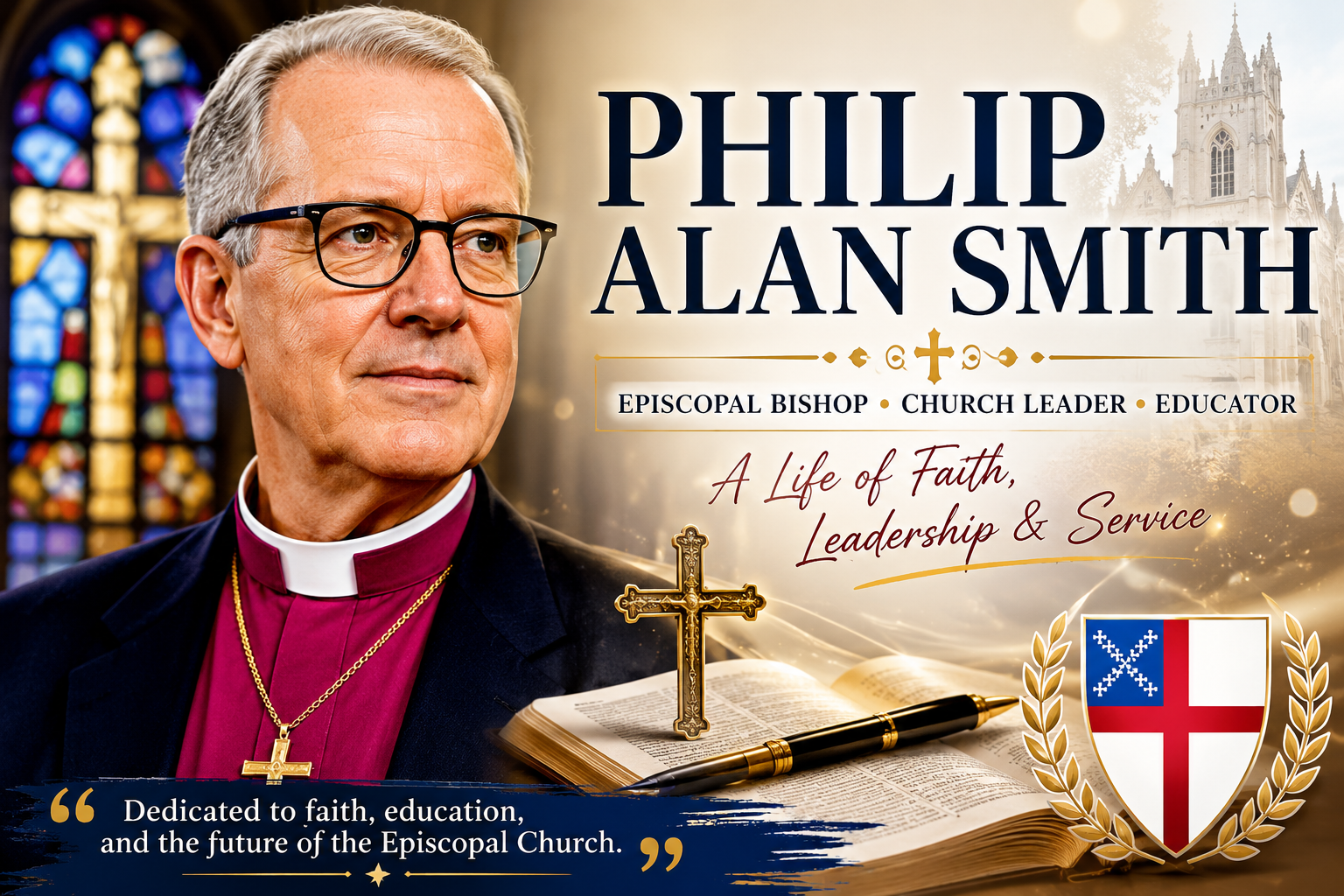
Philip Alan Smith was an American Episcopal bishop whose leadership coincided with one of the most transformative periods in modern church history. Best known for serving as the seventh Bishop of New Hampshire, he became a respected voice during debates that reshaped worship practices, church governance, and the evolving role of clergy in the Episcopal Church.
His career stretched across parish ministry, theological education, and senior church leadership. Beyond administrative responsibilities,Philip Alan Smith gained recognition for engaging thoughtfully with questions that influenced generations of worshippers and church leaders.
Who Is Philip Alan Smith? A Short Biography
| Detail | Information |
|---|---|
| Full Name | Philip Alan Smith |
| Date of Birth | April 2, 1920 |
| Birthplace | Belmont, Massachusetts, United States |
| Nationality | American |
| Profession | Episcopal Bishop |
| Years Active | 1949–1986 |
| Education | Harvard University; Virginia Theological Seminary |
| Famous For | Serving as Bishop of New Hampshire and contributing to Episcopal Church reforms |
| Height | — |
| Father | Herbert Leonard Smith |
| Mother | Elizabeth MacDonald |
| Marital Status | Married |
| Spouse | Barbara Taylor Smith |
| Children | 4 |
| Source of Income | Religious leadership and church service |
Early Life and Education
Growing Up in Massachusetts
Philip Alan Smith was born in Belmont, Massachusetts, in 1920. Raised in an environment that valued education and public service, he developed interests that later shaped both his ministry and leadership style.
His early years unfolded during a period of enormous social and political change in the United States. Those experiences influenced the balanced and measured approach that later defined his church career.
Academic Foundation at Harvard
Smith attended Harvard University and completed his undergraduate education in 1942. His academic background provided more than formal credentials; it introduced him to broad intellectual traditions that would remain visible throughout his ministry.
Like many of his generation, his path was interrupted by global events during World War II.
Military Service and Theological Training
During the Second World War, Smith served as an officer in an Army antiaircraft unit in Europe and received the Bronze Star Medal.
After military service, he pursued theological studies at Virginia Theological Seminary and completed a Bachelor of Divinity in 1949. This period marked the formal beginning of his religious vocation.
Entering Ministry and Building Leadership
Early Years as a Priest
Philip Alan Smith was ordained in 1949 and began serving in parish ministry shortly afterward. One of his earliest assignments was at All Saints’ Church in Atlanta.
He later served as rector at Christ Church in Exeter, New Hampshire. These years gave him direct experience with pastoral care, community leadership, and practical church administration.
Teaching and Formation of Future Clergy
Smith eventually transitioned into theological education, joining Virginia Theological Seminary.
His work as assistant professor of pastoral theology and later as chaplain and associate dean placed him in a position to influence future generations of Episcopal clergy. Colleagues often viewed him as a leader who valued thoughtful discussion and institutional continuity.
Rise to Episcopal Leadership
In 1970, Smith was elected Suffragan Bishop of Virginia and formally entered senior church leadership.
Only a few years later, he was elected Bishop of New Hampshire, beginning the role that would become the defining chapter of his public life.
Philip Alan Smith as Bishop of New Hampshire
Leading During a Period of Change
Smith served as Bishop of New Hampshire from 1973 until his retirement in 1986.
His tenure came at a moment when the Episcopal Church was facing major questions about identity, worship, and governance. Rather than avoiding difficult conversations, he became involved in efforts to guide institutional change while preserving continuity.
Participation in Church Debates
One of the defining issues of the era involved discussions surrounding the ordination of women.
Smith participated in conversations taking place across the national church and was known for engaging with these developments during a period of substantial transition. His leadership reflected the broader challenges facing many religious institutions in the late twentieth century.
Contributions to Worship and Church Life
Beyond governance debates, Smith contributed to broader liturgical developments.
He was associated with efforts connected to revisions of the Episcopal Prayer Book and the development of the 1982 Hymnal, both of which influenced worship practices for years afterward.
Personal Life and Legacy
Family and Life Beyond the Pulpit
Philip Alan Smith married Barbara Taylor Smith in 1949, and together they built a family while navigating the demands of church leadership.
Although much of his public life centered on ministry and administration, accounts of his career frequently describe him as committed to pastoral relationships and institutional service.
Retirement and Final Years
Smith retired in 1986 after more than three decades of ordained ministry and years of episcopal leadership.
He passed away on October 10, 2010, in Alexandria, Virginia. His legacy remains connected to a period when the Episcopal Church underwent meaningful structural and cultural change.
Why Philip Alan Smith Still Matters
Religious leadership is often remembered through moments of stability or moments of change. Philip Alan Smith’s career intersected with both.
His influence continues to be recognized through his work in theological education, church governance, and liturgical development. For those studying modern Episcopal history, his career offers insight into how institutions adapt while maintaining tradition.
Frequently Asked Questions
Q: Who was Philip Alan Smith?
A: Philip Alan Smith was an American Episcopal bishop who served as the seventh Bishop of New Hampshire and played a role in major church developments during the 1970s and 1980s.
Q: Where was Philip Alan Smith born?
A: He was born in Belmont, Massachusetts, United States, on April 2, 1920.
Q: What is Philip Alan Smith known for?
A: He is best known for leading the Episcopal Diocese of New Hampshire and contributing to discussions around church reform, liturgy, and worship.
Q: Did Philip Alan Smith serve in the military?
A: Yes. During World War II, he served as an officer in an Army antiaircraft unit in Europe and received the Bronze Star Medal.
Q: When did Philip Alan Smith retire?
A: He retired from his role as Bishop of New Hampshire in 1986.
Conclusion
Philip Alan Smith’s life reflected a blend of scholarship, ministry, and institutional leadership. From Harvard classrooms to wartime service and eventually to the leadership of the Episcopal Diocese of New Hampshire, his journey mirrored many of the defining transitions of twentieth-century American religious life.
His work remains relevant not because of headlines or controversy, but because of his steady involvement in moments that shaped the future direction of the Episcopal Church. For readers exploring modern church history, his story remains a meaningful place to begin.



[…] article explores what is publicly known about Rebecca Liddicoat, including her background, education, relationship history, family life, and why she remains a […]