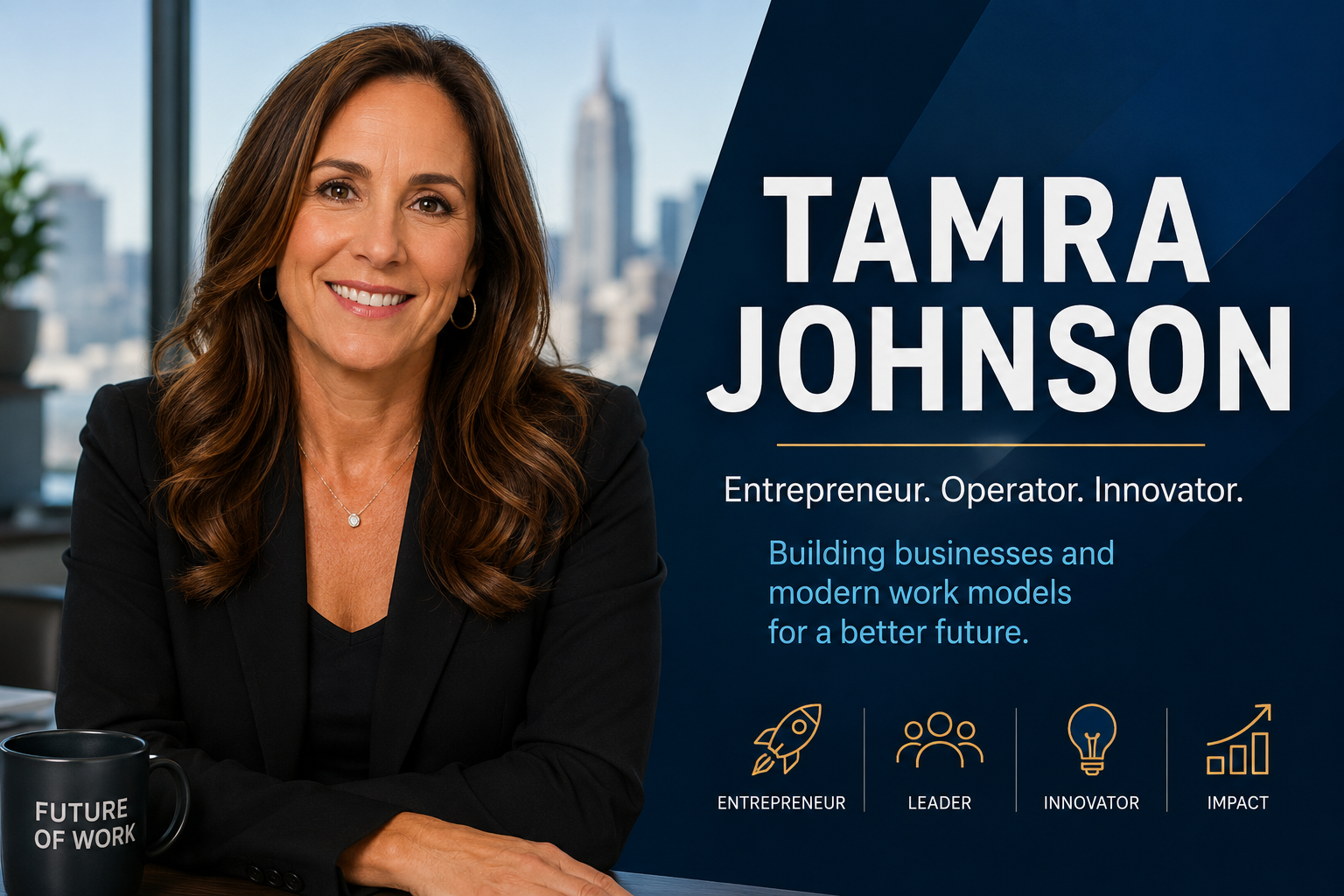
Who Is Tamra Johnson? A Short Biography
| Detail | Information |
|---|---|
| Full Name | Tamra Johnson |
| Nationality | American |
| Profession | Entrepreneur, Business Executive, Investor |
| Education | BS in Aeronautics and Astronautics (MIT); MS in Management Science and Engineering (Stanford University); MBA (UCLA Anderson School of Management) |
| Famous For | Leadership roles in technology and workforce innovation; founding and scaling multiple ventures |
| Source of Income | Business leadership, entrepreneurship, advisory roles, investments |
Tamra Johnson has built a career at the intersection of technology, operations, and entrepreneurship. While many business leaders rise through a single industry, Johnson’s path spans aerospace engineering, communications infrastructure, executive leadership, and modern workforce solutions.
Her professional story reflects a broader shift happening across business today: companies increasingly value leaders who can combine technical expertise with strategic execution. From engineering programs to startup leadership and advisory work, Tamra Johnson has developed a reputation for helping organizations scale while adapting to changing ways of working.
This article explores her background, career journey, leadership style, and the ideas that have shaped her work.
Early Life and Educational Foundation
Growing Up With an Entrepreneurial Mindset
Tamra Johnson has spoken publicly about growing up in rural Texas outside San Antonio in a family environment where entrepreneurship was visible from an early age. Watching family-run business activity become part of everyday life helped shape her understanding of work, responsibility, and opportunity.
That early exposure appears to have influenced the way she later approached business creation and leadership. Rather than viewing careers as fixed paths, she developed an approach centered on solving problems and building systems.
A Strong Technical Education
Johnson’s educational background stands out for combining engineering and business disciplines.
She earned a Bachelor of Science in Aeronautics and Astronautics from the Massachusetts Institute of Technology, followed by a Master of Science in Management Science and Engineering from Stanford University. She later completed an MBA at UCLA Anderson.
That combination created a foundation that blends technical analysis, operational thinking, and executive decision-making.
Why Her Academic Path Matters
Many modern executives emerge either from business or technical fields. Johnson’s education allowed her to move between both worlds.
Engineering disciplines emphasize structured problem-solving and systems thinking, while business education develops strategy, finance, and leadership skills. Together, those experiences became a recurring theme throughout her career.
Career Journey: From Aerospace to Entrepreneurship
Early Experience in Aerospace and Systems Engineering
Before launching ventures of her own, Tamra Johnson worked at Northrop Grumman in engineering and program-related roles.
Her work included systems engineering, integration, and technology-focused operational responsibilities. Large-scale technical environments often demand coordination across teams, schedules, budgets, and long planning cycles.
Those experiences likely helped shape her later approach to building businesses and managing complexity.
Building Dryad Communications
Johnson later founded Dryad Communications, a broadband and communications company focused on expanding access in underserved and rural communities.
Infrastructure businesses require balancing technical execution with commercial realities, making this stage of her career especially notable.
Building communications services in underserved regions also reflects a recurring theme in Johnson’s work: creating systems that broaden access and opportunity.
Expanding Into Workforce Innovation
Johnson later became associated with leadership initiatives focused on the future of work.
She founded FlexTeam, a business consultancy model designed around experienced professionals working flexibly across projects. The concept aligned with growing demand for remote collaboration, specialized expertise, and nontraditional employment structures.
Her work eventually expanded into executive leadership roles connected to operational strategy and workforce technology.
Leadership Style and Business Philosophy
Combining Operations With Human-Centered Leadership
One of the characteristics often associated with Tamra Johnson’s leadership approach is balancing operational rigor with flexibility.
Rather than treating business growth as purely financial expansion, her work frequently emphasizes how teams collaborate, communicate, and stay effective over time.
That perspective became increasingly relevant as companies adopted distributed work models.
Supporting Professional Flexibility
A recurring idea in Johnson’s public interviews and professional profiles is the importance of creating more opportunities for experienced professionals to remain engaged in meaningful work.
This viewpoint aligns with larger workforce trends that prioritize flexibility, project-based engagement, and outcome-focused management.
As organizations continue redesigning how teams operate, leaders who understand both systems and people have become increasingly influential.
Systems Thinking as a Competitive Advantage
Johnson’s engineering background appears throughout her career decisions.
Systems thinkers tend to look beyond isolated problems and focus on how processes connect. In business environments, this often leads to improvements in efficiency, decision-making, and long-term scalability.
That mindset helps explain how Johnson transitioned across industries while maintaining a consistent leadership identity.
Entrepreneurship, Innovation, and Long-Term Impact
Building Across Multiple Industries
Few professionals move comfortably between aerospace, communications, operations, and workforce platforms.
Johnson’s career demonstrates how transferable skills such as leadership, analysis, and execution can create opportunities across sectors.
Instead of specializing narrowly, she developed expertise around building organizations and solving operational challenges.
Encouraging Inclusive Business Growth
Another visible element of her work has been interest in expanding opportunities for broader participation in entrepreneurship and leadership.
Modern business conversations increasingly focus on creating pathways for experienced professionals and underrepresented founders to remain active in innovation ecosystems.
Johnson’s initiatives reflect that larger movement.
Lessons Emerging Leaders Can Learn
Professionals looking at Johnson’s career can draw several practical ideas:
- Build expertise that combines technical and business knowledge
- Stay open to career transitions across industries
- Focus on solving real operational problems
- Develop leadership skills alongside technical skills
- Create systems that help teams succeed over time
Frequently Asked Questions
Q: What is Tamra Johnson known for?
A: Tamra Johnson is known for her work as an entrepreneur, executive operator, and business leader. Her career includes leadership roles in technology and workforce innovation as well as founding ventures in communications and consulting.
Q: What did Tamra Johnson study?
A: Her academic background combines engineering and business education. She studied aeronautics and astronautics, management science and engineering, and later completed an MBA.
Q: Has Tamra Johnson worked outside the startup world?
A: Yes. Earlier in her career she worked in engineering and operational roles before moving into entrepreneurship and executive leadership.
Q: What leadership style is associated with Tamra Johnson?
A: Her public career profile suggests a leadership style focused on systems thinking, operational excellence, and creating flexible, high-performing teams.
Conclusion
Tamra Johnson’s career illustrates how technical depth and business leadership can work together to create lasting impact. From engineering environments to entrepreneurship and executive operations, she has consistently focused on building practical solutions and adapting to changing ways of working.
Her professional journey also reflects a broader shift in modern business, where flexibility, interdisciplinary thinking, and strong execution increasingly define successful leadership. For readers interested in entrepreneurship, operational strategy, or future-of-work trends, her path offers a useful example of how diverse experience can become a long-term advantage.



[…] with extensive media coverage, there is very limited verified public information available about Tera Ferguson. Because reliable biographical coverage is scarce, it is important to separate confirmed details […]